

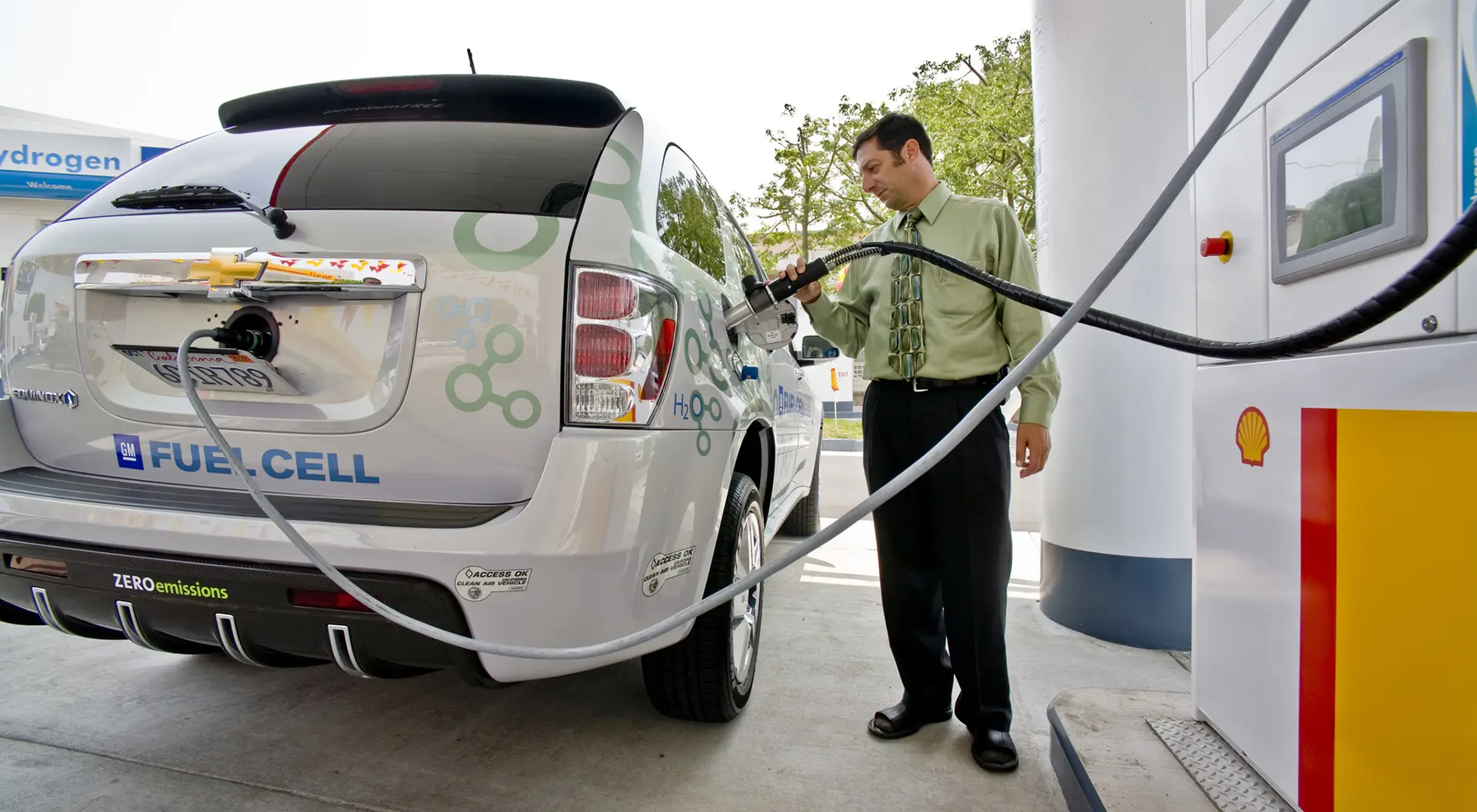
The world’s energy transition rarely follows a straight path, and the story of blue hydrogen in 2025 proves it. After years of hype and hesitation, the market is finally taking shape. Some projects have slowed, but others are racing toward commercial launch. Governments, investors, and industry alike now see blue hydrogen as an essential part of the net-zero and low-carbon puzzle especially where renewables can’t yet deliver firm, round-the-clock power.
Despite the bumps, the direction is unmistakable. Blue hydrogen is no longer a pilot-scale concept; it’s a bridge fuel driving industrial decarbonisation and energy security. Market forecasts vary, but most point to global value rising from around $25 billion in 2024 to more than $200 billion by 2050. That growth, supported by fresh policy incentives in the U.S., Europe, and Asia, signals a decade of major scaling ahead.
Reinventing the Core of Blue Hydrogen
Most low-carbon hydrogen still comes from steam methane reforming (SMR) combined with carbon capture and storage (CCS). SMR remains dominant because it’s proven, reliable, and integrates neatly with natural-gas systems. Yet its drawbacks are increasingly clear: high heat demand, complex solvent loops, and only partial capture efficiency. The market’s next phase depends on cleaner, simpler reforming technology.
This is where FARST changes the picture. Instead of chasing carbon after combustion, FARST captures it before combustion, isolating CO₂ in a concentrated stream. This pre-combustion loop achieves capture rates above 95 percent while eliminating the bulky scrubbers and chemicals that make conventional SMR costly. The result: smaller plants, lower operating load, and truly low-carbon hydrogen at scale.
A Market Finding Its Footing
Blue hydrogen’s ecosystem is maturing fast. National hydrogen strategies now fund hubs, CO₂ pipelines, and storage basins, while private capital flows into early projects. The Middle East, North America, and Europe lead the charge thanks to cheap gas, ample storage, and heavy-industry demand.
The U.K. expects final investment decisions on major plants this year, marking its first large-scale blue hydrogen rollout. In the U.S., the Inflation Reduction Act’s hydrogen and carbon-capture credits have made projects bankable. Canada is co-developing hybrid blue-green hubs aimed at export markets in Europe and Asia.
Challenges remain—supply-chain congestion, inflation, and regulatory uncertainty have delayed several announcements—but such growing pains are typical of any emerging energy industry. The fundamentals still point one way: rising demand for clean molecules and expanding infrastructure to deliver them.
Where Growth Will Come From
Blue hydrogen’s biggest early adopters are power generation, refining, fertiliser, and steel, all sectors that can’t easily electrify. Pipelines will move most hydrogen within clusters, while ammonia will serve long-distance trade. These are durable, revenue-backed markets that underpin investor confidence.
Innovation will determine the winners. Auto-thermal reforming (ATR) and hybrid electro-reforming are advancing, but the real step-change is in process design—minimising heat loss, simplifying capture, and reducing size. Here again, FARST provides measurable gains: modular units from 2 to 50 tonnes per day scale seamlessly to 500 t/d facilities, close to demand centres. Less distance, less loss, more flexibility.
Blue Hydrogen’s Place in a Mixed Energy Future
Energy systems are diversifying, not converging on one technology. Blue, green, and turquoise hydrogen each serve specific roles depending on grid maturity and resource base. Blue hydrogen’s edge lies in deployability now—using existing gas networks while renewables and electrolysers continue to ramp.
Critics call it a temporary bridge, but every tonne of CO₂ captured today accelerates decarbonisation. FARST’s pre-combustion approach turns that bridge into a durable platform: efficient, compact, and fully compatible with future hybrid models that blend blue and green hydrogen as economics evolve.
FARST: Making Low-Carbon Hydrogen Real
FARST is more than a technology—it’s a deployment model. Modular design shortens engineering cycles and enables replication. Its closed-loop reforming cuts parasitic energy losses, avoids solvents, and yields pure CO₂ streams ready for storage or utilisation.
For developers, that means lower capital cost and faster build times.
For investors, it means verified carbon intensity and long-term compliance with emerging clean-hydrogen standards.
For partners, it means reliable hydrogen that integrates easily into industrial, power, and mobility systems.
From microgrids and AI data-centres to refuelling hubs and industrial clusters, FARST’s adaptability makes low-carbon hydrogen feasible wherever it’s needed most.
The Market Questions Everyone’s Asking
How fast is the blue hydrogen market growing?
Forecasts vary, but consensus points to rapid, sustained growth through 2050 as industrial and policy demand converge.
Why does steam methane reforming still dominate?
Because it’s mature and widespread—but its energy intensity and post-capture systems are costly, which drives interest in pre-combustion solutions like FARST.
Where will the next wave of projects be built?
Regions combining low-cost gas with available CO₂ storage: North America, the Middle East, and the U.K. are first movers.
What sets FARST apart from conventional blue hydrogen systems?
FARST captures CO₂ before combustion, achieving over 95 percent efficiency, cutting emissions by up to 35 percent, and allowing compact, modular plants.
Is blue hydrogen a bridge or a destination?
Both. It’s the fastest way to reduce industrial emissions today and a foundation for future hybrid blue-green hydrogen ecosystems.
The Bottom Line
The headlines may be mixed, but the direction isn’t. Blue hydrogen is moving from potential to proof, fuelled by necessity and innovation. As policies tighten and industries seek real-world solutions, technologies that capture carbon cleanly and scale quickly will define the next decade.
FARST sits at that intersection—a practical, proven route to low-carbon hydrogen that works within today’s infrastructure while preparing for tomorrow’s hybrid energy systems. The bridge to net zero is already being built; FARST helps make sure it holds.