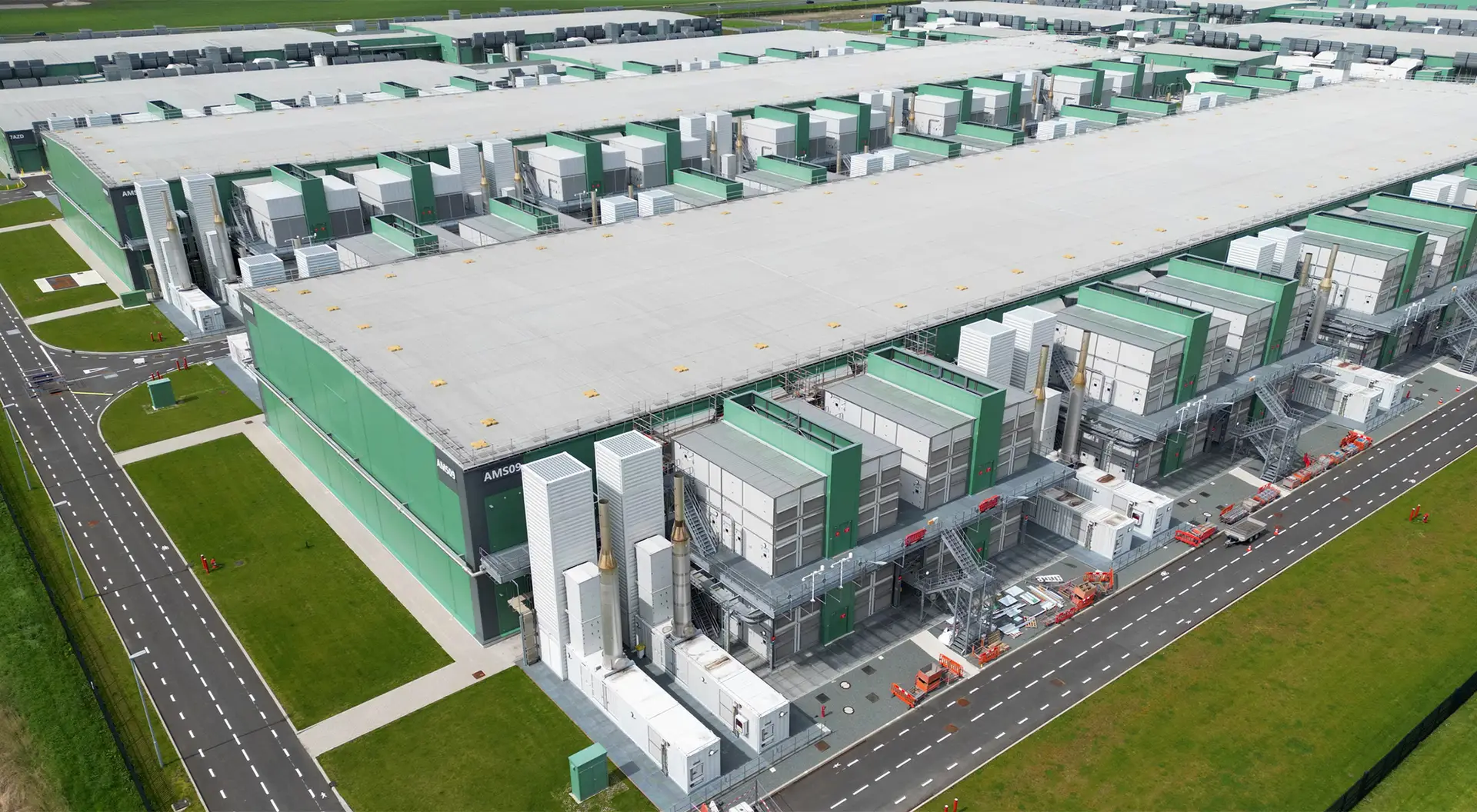
FASRT Hydrogen Clean. Low Cost. Built for Scale. Powering AI and the Cloud
FARST Hydrogen: Redefining Blue Hydrogen for the AI Era
FARST’s advanced pre-combustion technology redefines blue hydrogen, achieving up to 98% CO₂ capture and delivering scalable, low-carbon power for AI, industry, and the global energy transition already underway.
Blue Hydrogen, Reinvented: How FARST Is Delivering True Low-Carbon Energy for the AI Age
The age of artificial intelligence has arrived faster than the energy system can adapt.
Data centers — the physical engines of the digital world — are now among the fastest-growing consumers of electricity on the planet. AI and cloud computing infrastructure require continuous, high-density, low-carbon power. Yet the grid in most regions cannot deliver it fast enough or cleanly enough.
Governments and companies are under pressure to decarbonize, but new renewable capacity and transmission upgrades take years to build. At the same time, global demand for reliable, dispatchable power is accelerating. The result is a widening gap between ambition and availability — and a pressing need for technologies that can deliver clean, controllable energy today.
This is where blue hydrogen, and more specifically FARST’s next-generation reforming technology, enters the picture.
Blue Hydrogen: Often Misunderstood, Now Redefined
Hydrogen has long been recognized as the most versatile clean energy carrier. It can be stored, transported, and converted into electricity or heat without producing CO₂ at the point of use. Yet debates over how it should be produced have often overshadowed its potential.
“Green hydrogen” — made from water electrolysis using renewable electricity — dominates headlines. But it remains costly, infrastructure-limited, and dependent on variable renewable power. “Blue hydrogen” — produced from natural gas with carbon capture — has been criticized for incomplete capture rates and legacy processes.
However, those criticisms stem largely from traditional SMR (Steam Methane Reforming) systems, which separate CO₂ only after combustion, making capture technically difficult and energy-intensive.
The reality is that blue hydrogen’s potential depends on the process, not the color.
And with the emergence of FARST’s patented pre-combustion reforming technology, blue hydrogen is no longer a compromise — it’s a proven, deployable low-carbon solution.
The Problem with Conventional SMR
In conventional SMR, methane reacts with steam at high temperatures to form hydrogen and CO₂. The carbon dioxide is then separated after combustion, typically using amine-based solvents. This adds complexity, cost, and parasitic energy load. Capture rates rarely exceed 85–90%, and solvent degradation leads to significant operational expenditure.
From a lifecycle perspective, these systems struggle to deliver hydrogen with a carbon intensity low enough to meet emerging clean hydrogen standards such as the U.S. IRA’s 4.0 kg CO₂/kg H₂ threshold.
Additionally, SMR plants are often large, centralized facilities with slow construction timelines. Their economics depend on scale — not flexibility — making them less suitable for distributed or modular energy generation close to demand.
Introducing FARST: The Next Evolution of Blue Hydrogen
FARST’s technology redefines what blue hydrogen can be.
Instead of treating CO₂ as an afterthought, FARST captures it before combustion — in the reforming process itself. The system uses pre-combustion carbon separation integrated within a proprietary chemical loop, eliminating the need for solvents or post-combustion capture units.
The result is a simpler, more efficient process that produces clean hydrogen with up to 98% carbon capture, a carbon intensity as low as 3.4 kg CO₂/kg H₂, and a modular design scalable from 2 to 500 tonnes per day.
Each module can operate independently or be clustered to form large-scale facilities, providing investors, developers, and customers with flexibility across multiple project sizes and energy use cases.
How Pre-Combustion Carbon Capture Works
In the FARST system, natural gas undergoes a controlled reaction that separates hydrogen and carbon species before oxidation. The carbon stream remains concentrated and pure — ready for compression, storage, or industrial reuse — without the energy penalty of solvent-based systems.
This pre-combustion approach not only simplifies plant design but also improves thermodynamic efficiency. By integrating reforming and capture within a single step, FARST reduces both the number of components and the overall energy loss.
The hydrogen produced is then used to drive turbine or fuel cell generation — or supplied as feedstock to refineries, mobility, or industrial applications. In “behind-the-fence” installations, the system can directly power data centers, AI infrastructure, or industrial parks with low-carbon, dispatchable energy independence.
Economic and Carbon Advantages
A key insight from the original white paper is that hydrogen production from natural gas can remain competitive and low-carbon when efficient capture technologies are applied. FARST advances this principle further through design simplicity and operational efficiency.
wdt_ID
wdt_created_by
wdt_created_at
wdt_last_edited_by
wdt_last_edited_at
Parameter
Conventional SMR + CCS
FARST Technology
1
login.farst
10/11/2025 05:46 PM
login.farst
10/11/2025 05:46 PM
Capture Rate
66%–90%
Up to 98%
2
login.farst
10/11/2025 05:46 PM
login.farst
10/11/2025 05:46 PM
Capture Method
Post-combustion (solvent)
Pre-combustion (loop separation)
3
login.farst
10/11/2025 05:46 PM
login.farst
10/11/2025 05:46 PM
Carbon Intensity
4.5–5.5 kg CO₂/kg H₂
<3.4 kg CO₂/kg H₂
4
login.farst
10/11/2025 05:46 PM
login.farst
10/11/2025 05:46 PM
Complexity
High (multi-unit)
Streamlined (integrated)
5
login.farst
10/11/2025 05:46 PM
login.farst
10/11/2025 05:46 PM
Capex/Opex
High
58% Lower
6
login.farst
10/11/2025 05:46 PM
login.farst
10/11/2025 05:46 PM
Scalability
Centralized
Modular (2–1000 t/day) Scalable
FARST Hydrogen Comparison Table
The above comparison table highlights how FARST’s integrated, pre-combustion carbon capture delivers substantially higher efficiency, lower emissions, and reduced operating costs — offering a practical, scalable pathway to true low-carbon hydrogen production.
This combination of high capture efficiency and modular scalability gives FARST a distinct advantage in both cost and deployment flexibility.
It allows hydrogen to be produced near demand centers — cutting transport losses, shortening timelines, and aligning with ESG and tax credit frameworks such as the U.S. IRA and Canada’s Clean Hydrogen Investment Tax Credit.
Powering the AI and Cloud Revolution
The AI revolution has transformed data centers from simple storage facilities into global power consumers. Each new cluster of GPUs, servers, and cooling systems represents tens or hundreds of megawatts of continuous demand.
Grid upgrades cannot keep pace, and renewable intermittency creates reliability issues for AI workloads that must run 24/7.
That’s why on-site, ‘behind-the-fence’ low-carbon generation — what the Company calls FARST Power for AI — is emerging as a critical solution.
By integrating FARST hydrogen reformers with fuel cells or turbines, data centers can achieve energy independence and carbon compliance simultaneously. The hydrogen produced can be stored for peak load management or used continuously, with CO₂ captured at source and permanently sequestered.
This model transforms hydrogen from a fuel of the future into a strategic energy infrastructure for the present.
Ready for Deployment, Built for Growth
Unlike experimental electrolysis or large-scale CCS retrofits, FARST’s platform uses mature industrial technologies configured in a novel, efficient way. This maturity reduces technology risk, accelerates permitting, and aligns with existing gas infrastructure — an important factor for investors seeking near-term returns.
The modular design means FARST systems can be deployed:
• At industrial parks seeking to decarbonize heat and power,
• Alongside refineries or fertilizer plants needing clean hydrogen feedstock,
• Or as behind-the-fence solutions powering AI, cloud, and advanced manufacturing facilities.
Each deployment not only delivers low-carbon energy but also provides a pathway to full circularity, with CO₂ streams available for reuse in industrial applications or permanent storage.
Blue Hydrogen’s Real Role in the Energy Transition
Critics often describe blue hydrogen as a “bridge” technology — a stopgap until green hydrogen becomes affordable. But with systems like FARST, that narrative no longer holds.
When carbon intensity rivals that of renewable-derived hydrogen — and costs are lower, using established infrastructure — blue hydrogen becomes not a bridge, but a cornerstone.
It leverages existing resources to decarbonize quickly, buys time for renewables to scale, and provides the reliability the digital and industrial economy demands.
In short, the color debate misses the point. What matters is carbon intensity, scalability, and readiness — and on those metrics, FARST blue hydrogen leads.
A Call to Collaboration
FARST Hydrogen is now advancing project partnerships, investment collaborations, and site development opportunities in North America and internationally.
By combining proven chemistry with forward-thinking design, FARST aims to make clean hydrogen practical, profitable, and scalable — not a distant goal, but a real pathway to low-carbon energy security.
As AI and industrial growth reshape global power demand, the need for dependable clean generation will only intensify.
FARST’s technology stands ready to deliver — modular, low-carbon, and future-proof.
“FARST is proving that blue hydrogen, done right, isn’t a bridge — it’s the foundation of the low-carbon economy,”
says Chris MacNee, Co-Founder and CEO of FARST Hydrogen.
“Our technology shows that practical decarbonization and energy independence can go hand in hand, powering everything from heavy industry to the next generation of AI infrastructure.”
Conclusion
Blue hydrogen’s future depends on innovation, not ideology.
FARST’s pre-combustion reforming technology offers a mature, economically viable route to low-carbon energy at scale — one that meets global climate goals while delivering the reliability modern industries require.
As the world’s power needs grow ever faster, especially with AI at the forefront, solutions like FARST aren’t just an alternative — they are essential.
Have a question about powering AI, energy infrastructure, or deploying low-carbon hydrogen systems?
We work with partners, investors, and developers to deliver scalable, clean hydrogen power for AI data centers, industrial sites, transport hubs, and energy applications.
Our team reviews every enquiry and responds within one business day.