

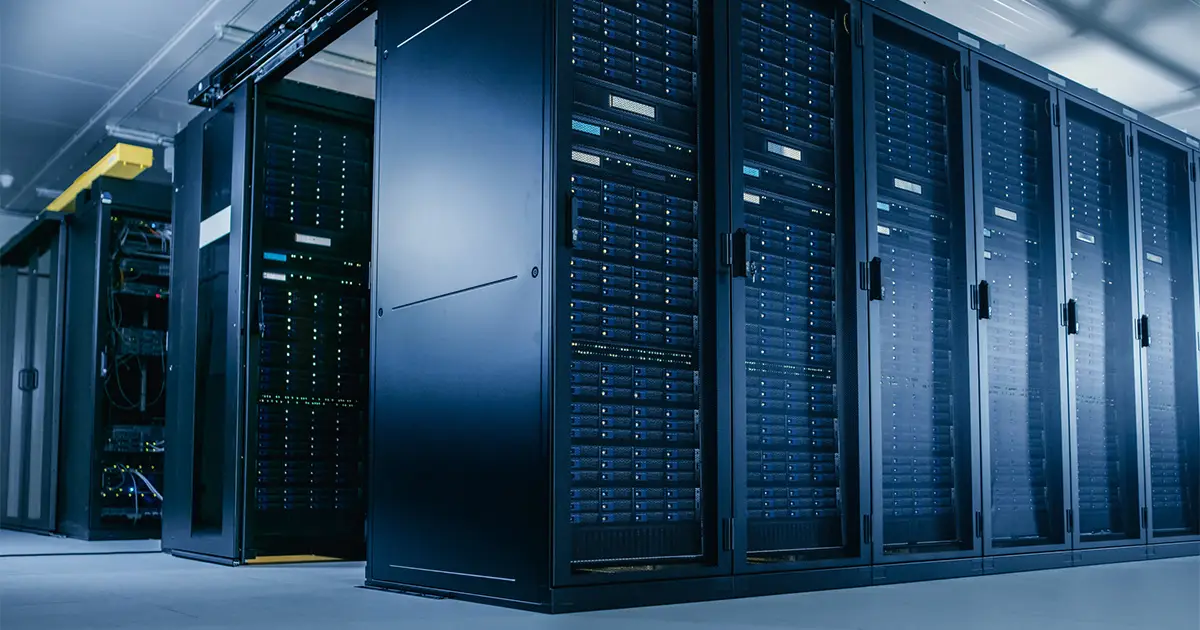
FARST Blue Hydrogen: Clean, Low-Cost Energy for AI Data Centres
Artificial Intelligence is expanding at an astonishing pace. From personalised healthcare to generative content and self-driving systems, AI has gone from futuristic concept to real-world tool in just a few years. But behind this surge lies a growing crisis — the colossal amount of electricity required to train and operate large-scale AI models.
A single training run for a frontier model can consume more than 1,000 megawatt-hours — more than 100 households use in a year. With thousands of models being trained and millions of queries processed daily, energy use is doubling annually. Data centres, the engine rooms of AI, are now straining both local utilities and global grids.
In some regions, new data centres have already been delayed because grid operators cannot guarantee stable supply. The race to scale AI is colliding with the physical limits of today’s energy infrastructure.
AI’s Energy Challenge
Data centres are designed for high uptime, running GPUs and TPUs around the clock. But these chips consume vast amounts of power and produce intense heat, requiring additional cooling systems that drive demand even higher.
The result: an energy bottleneck. Grid congestion, rising costs, and the slow pace of new infrastructure approvals are putting pressure on cloud providers and AI companies alike. Simply put, traditional energy sources alone cannot keep up with AI’s growth curve.
That’s why hydrogen is emerging as a cornerstone solution.
Why Hydrogen Fits AI Infrastructure
Hydrogen fuel cells are already proving their value in logistics and transport. But for AI data centres, their strengths are even more compelling:
- Clean and flexible: Hydrogen systems produce electricity with water as the only byproduct, and can store renewable energy for later use.
- Grid independence: Fuel cells provide on-site power, shielding operations from unstable or overused grids.
- Scalable: Systems can be deployed modularly, expanding as AI workloads grow.
- Efficient: Unlike combustion, fuel cells rely on electrochemical conversion, reducing energy losses.
- Resilient: By balancing supply and demand in real time, hydrogen systems can reduce costs and prevent blackouts.
Major players are already testing the waters. Microsoft has partnered with Caterpillar to trial large-format hydrogen fuel cells for backup power. Equinix has deployed Bloom Energy fuel cells at multiple sites. Google has publicly explored hydrogen as a low-carbon alternative to diesel generators.
This shift highlights a turning point: hydrogen isn’t just backup anymore — it’s becoming a core power option for digital infrastructure.
FARST: Blue Hydrogen for AI Data Centres
While much attention has been given to “green” hydrogen, cost and scalability remain barriers. That’s where FARST (Fluidised Autothermal Reforming Syngas Technology) steps in.
FARST is a patented, next-generation pathway to low-cost, decarbonised Blue Hydrogen (BH₂). It enables modular, efficient plants that can be co-located directly with AI data centres. Instead of waiting for expensive grid upgrades, operators can secure reliable, clean energy at the source.
A co-located FARST BH₂ plant can:
- Generate low-cost, decarbonised power on site, cutting grid dependence.
- Deliver resilience for AI workloads that demand 24/7 uptime.
- Scale modularly as computing demand increases.
- Support ESG goals with measurable carbon reductions.
With AI’s energy consumption doubling annually, this model offers not just sustainability, but a competitive edge.
Real-World Trends and the Path Ahead
Industry reports back this trajectory. Deloitte projects a 17% CAGR in stationary fuel cell markets through 2030, driven by digital infrastructure demand. The International Energy Agency notes hydrogen production costs from renewables have already dropped by 60% since 2010, with policy incentives accelerating adoption worldwide.
For AI operators, the implications are clear:
- Hybrid energy models combining grid power, batteries, and hydrogen will become standard.
- Hydrogen will replace diesel as the default backup option.
- On-site hydrogen generation will increasingly be the fastest, most reliable path to expansion.
The AI revolution depends as much on smarter energy as it does on smarter algorithms. FARST Blue Hydrogen makes it possible to scale AI without overloading grids or spiking emissions.
Conclusion: AI Needs Smarter Energy
The future of AI will be defined not only by model breakthroughs, but by energy breakthroughs. Data centres are already hitting physical and environmental limits. Without new power strategies, progress could stall.
Hydrogen offers a clean, flexible, and scalable pathway forward — and FARST’s low-cost Blue Hydrogen technology unlocks that potential today.
As AI reshapes industries, it will be powered not just by silicon chips, but by smarter energy choices. Co-located FARST BH₂ plants ensure that the intelligence of tomorrow is built on a foundation of sustainable, resilient power.